


Surface Dweller
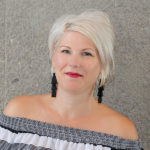
Stephanie Haslam is on a mission to bring Noosa’s native plants to the surface. Deb Caruso caught up with the flora fighter to find out more.
At age 74 there is no sign of Stephanie Haslam slowing in her quest to sow Noosa’s native plants firmly in the hearts and minds of our local community through art.
Despite claiming that she is starting to feel her age, just weeks before her 50th wedding anniversary with husband Tony, Stephanie was busy preparing an exhibition of her own photographs as part of the Sunshine Coast Wildflower Festival.
The exhibition called “Noosa’s Native Plants” was an offshoot from the book of the same name that Stephanie wrote more than a decade ago in a bid to educate the community on native flora and redefine how Council, landscape gardeners and the backyard gardener approached their natural environment.
The book was inspired by Stephanie’s own inquisitive mind when she moved to Noosa 20 years ago after Tony had been offered a job at Noosa Shire Council.
Interested to find out more about her new backyard, Stephanie joined the Noosa Parks Association (NPA) Botany Group, under the stewardship of Dr Arthur Harrold, to whom she dedicated the first edition of “Noosa’s Native Plants”. This new knowledge changed her thinking about plants from ‘gardening’ to an appreciation of why plants grow where they do and the need to value and protect our natural environment if our species is to survive.
“I was a potter for 20 years and when we moved to Cooroibah and we chose our house depending on where the kiln would go,” she said.
A pottery exhibition for Stephanie’s work and an accident were major catalysts of change, even though Stephanie didn’t know at the time.
“Because of the exhibition, I had cleaned the benches, which normally only happened every 5 years and then Tony had an accident and my attention was focused in a different direction. I had already joined the botany group and had started taking a few photos and that started to consume me.
“My back enjoyed the rest from lifting blocks of clay and heavy boxes of pots. Eventually I sold my kiln to a friend, with visiting rights in case I wanted to return to the clay, but I never did. I had moved on.
“I became very involved with NPA and started the Friday Forum sessions and I took over the Botany Group when Arthur became too old to manage it. So that was what I did – and I can tell you that my back improved from not having to move heavy boxes of ceramics!
“I have an unreliable memory so I write everything down or record it in some way,” she said. “To get my head around all these hundreds and hundreds of plants I’d take photographs – really bad photographs – and I’d chase poor Arthur around and say “what was that again” and scribble my updates. He got used to me and was very good to me and taught me so much.
“I’d write notes on the back of the photo and that went into a shoebox and eventually it ended up in folders and finally “Noosa Native Plants” was born.
“When it came off the printing press – I just thought “nothing better than this – all my notes in one place!” she said. “It was a really big job and I was so fortunate to have a graphic designer Steve Cook who was willing to spend hours with me and my scribbles trying to make sense of it all.
“I was creating this book for people like me rather than botanists. People who come here and know nothing about what’s in their backyards and how they need to be looking after our environment better. Many people were involved with the book and some of my local heroes like Dave Burrows from the then Noosa Council and Phil Moran from Landcare wrote articles for it, making it more than just a field guide but a trubute to the many people dedicated to our natural environment. Sonia Macdonald from NPA edited and supported the work. The Noosa Integrated Catchment Association NICA published the book. This broadly based community organisation has helped spread the word to a wider audience. and given me the opportunity to involve artists in an ongoing Surface Design project.
So NICA launched the first edition and there are 5,000 of them floating around and is used in schools and universities. It’s not the be-all and end-all of botanical identification but it’s very focused on this area.”
The book is now on its third edition and has its own dedicated website which Stephanie is constantly updating with new photos, and facts.
The self- taught photographer and digital design artist says she enjoys a challenge and finding things out for herself.
“I like the process of finding out how to do it. If I can find someone who will tell me, that’s great but since I’ve mastered how to use a tablet, technology has taken over my life and Youtube is a great teacher.
The mother and grandmother has also learnt paper making, weaving and fabric printing as part of her lifetime dream to see Noosa’s native plants infiltrate the Noosa fashion and homewares scene.
“I would really love to see our native plants on fabric – shirts, hats, chairs. I see it could quite easily be done. The problem is the price. We’d have to produce it in Noosa and that makes it non-competitive in the marketplace.
Despite this, she has achieved changes in her own area with Noosa Biosphere partner organisations Noosa Ferry Cruise Company and Outrigger Little Hastings Street seeking out native designs for their uniforms.
Her desire to bring natives into the mainstream also fuelled the Surface Design Project and Competition which NICA started three years ago thanks to a Regional Arts Development Fund (RADF) grant. The project was designed to bring Noosa’s native plants to the surface by funding artists to create images and products with a true Noosa flavour using local native plants as the design motif.
For Stephanie the opportunity to commission and connect with local artists to create art featuring native plants was a way of influencing them to look local and embrace and express this through artistic expression.
“Artists were an easy choice for me because I know they have a way of seeing things that perhaps other people don’t and that can have a broad influence,” she said.
The Surface Design project has spawned a tea towel series and a Warhol-esque banksia t-shirt that are for sale from NICA as part of its fundraising.
One of the largest outcomes was the commissioning of six large fabric banners, each representing a different vegetation type using Noosa’s native plants as their inspiration. The banners aim to raise public awareness and appreciation of Noosa’s natural assets and proudly hang in the Noosaville Library as a reminder of our natural heritage.
“I’m running out of energy a bit which is inevitable. But I often think ‘oh I’ve just had this really good idea’ so I jump in the pool and then I look around for someone to teach me how to swim and that seems to be the story of my life.
Stephanie and Tony are both actively involved in conservation and managing our natural resources with Tony now holding the position of President of NICA. Stephanie says that they are often direct opposites but they are ethically aligned and that was important.
“I have been very fortunate to have had a roof over my head for many years and Tony indulges me. I couldn’t say he’s always encouraging – he’s more likely to be absolutely horrified when I get another idea and the house is then full of whatever I’m working on.
“We were talking the other day about gifts you give a child and if I could give a child a gift as the good fairy it would be an inquiring mind. I think I’ll be lying there, marvelling at the grain in the timber Because I do find things extraordinarily interesting.”
Stephanie’s second book “Grasses of the Noosa Biosphere” was co-written with Sonia MacDonald and the two are preparing a CD on sedges, rushes and restiads to be released before Christmas. Stephanie has ordered some fabric and intends to ‘play with a few things’. Knowing this inspirational lady, it won’t be long before she has developed her own fashion range featuring Noosa’s native plants so keep an eye out for that!